
Technical guide
How to choose a cleaning process for electronic boards?
Before choosing a machine, you have to choose a process. The right process depends on the contaminant, the type of board and the target cleanliness level — not the other way round.
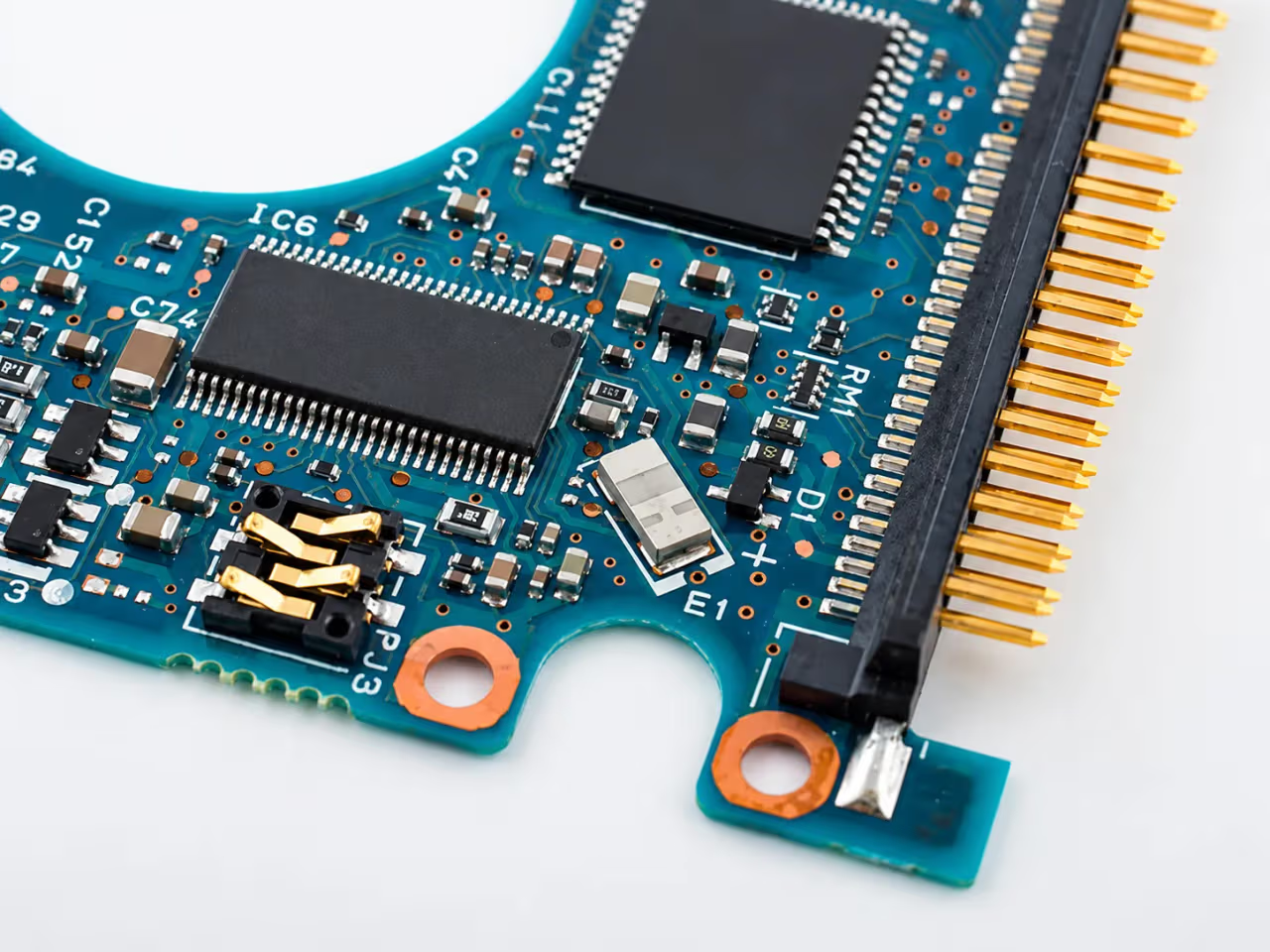
The most common reflex is to start with the machine. It should be the other way round: first define the contaminant to be removed and the expected cleanliness level, then deduce the process, and only then the equipment. This guide lays out the method.
Start from the contaminant, not the machine
An assembled board rarely carries just one type of soil. Depending on the assembly process, you will find flux residues (no-clean or water-soluble), unreflowed solder paste, ionic traces, and sometimes residues of conformal coating or protective gel. Each behaves differently when exposed to chemistry, temperature and mechanical agitation.
Identify the contaminant first
- Type of flux used (no-clean, water-soluble, rosin) and its data sheet.
- Component density and the presence of low-standoff packages (BGA, QFN).
- Sensitivity of components to water, temperature and ultrasonics.
- Final cleanliness requirement: cosmetic, functional, or standards-based (ionic residues).
Criteria for choosing the process
Four families of processes cover most cases in aqueous cleaning. The table below summarises their typical areas of use — always to be confirmed by a trial on your actual parts.
| Process | Strength | Watch point |
|---|---|---|
| Immersion + agitation | Gentle, uniform | Hard-to-reach areas under components |
| Ultrasonics | Fine penetration | Sensitivity of some components |
| Submerged jets | Directed mechanical action under immersion | Nozzle and flow-rate setting |
| Spray Under Immersion | Combines immersion and jets | Defining the washing kinematics |
Usage guidelines (to be validated by trial)
Measure cleanliness, don't guess it
A board that is “clean to the eye” may retain ionic residues that degrade long-term reliability (leakage currents, corrosion, dendrites). Cleanliness must be assessed by an objective measurement — extract resistivity, localised measurements — and tracked over time, not simply observed visually.
Build traceability in from the start
In demanding electronics, the cleaning process must be documented like a production step: cycle parameters, lots, operator, inspection results. Planning for traceability when choosing the machine avoids having to add it afterwards.
Related products
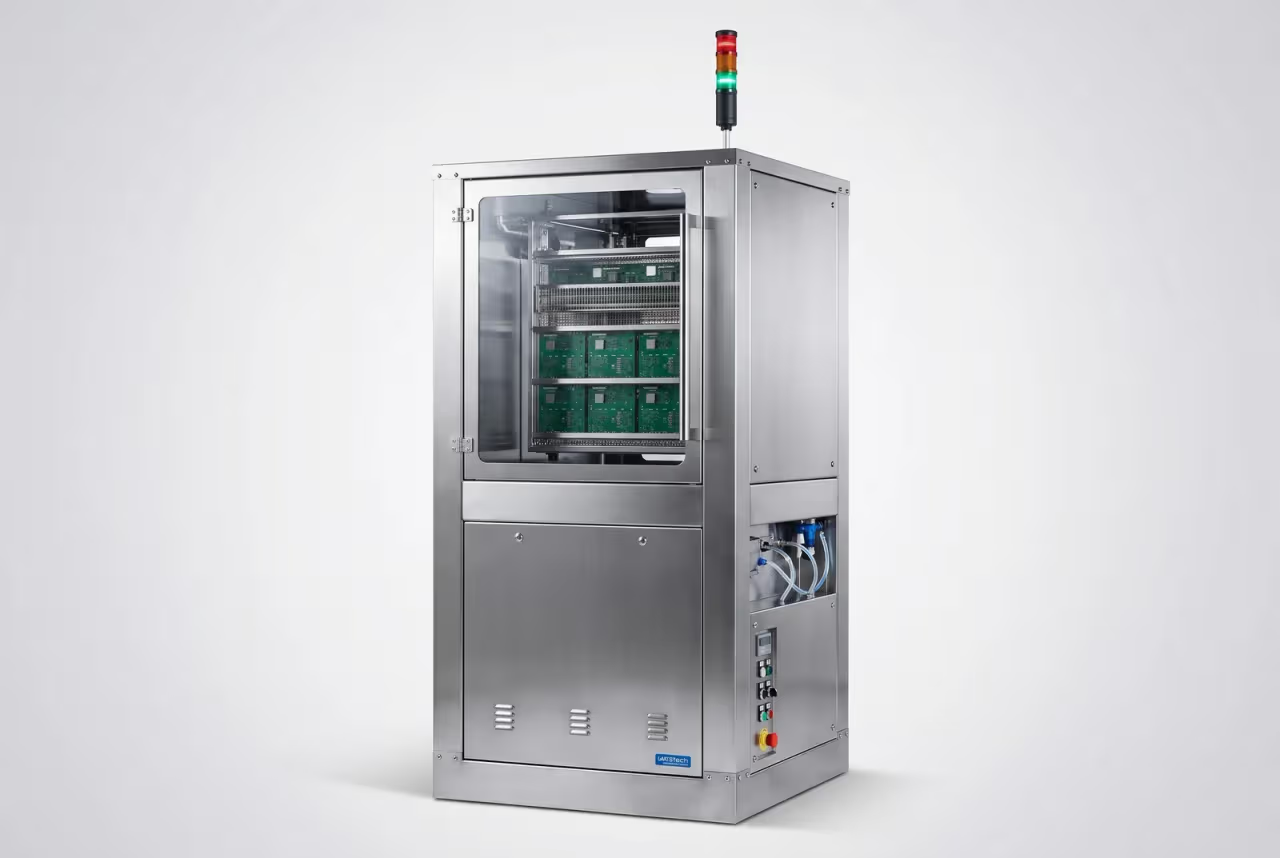
NC25
Flux removal and cleaning of electronic boards by submerged jets
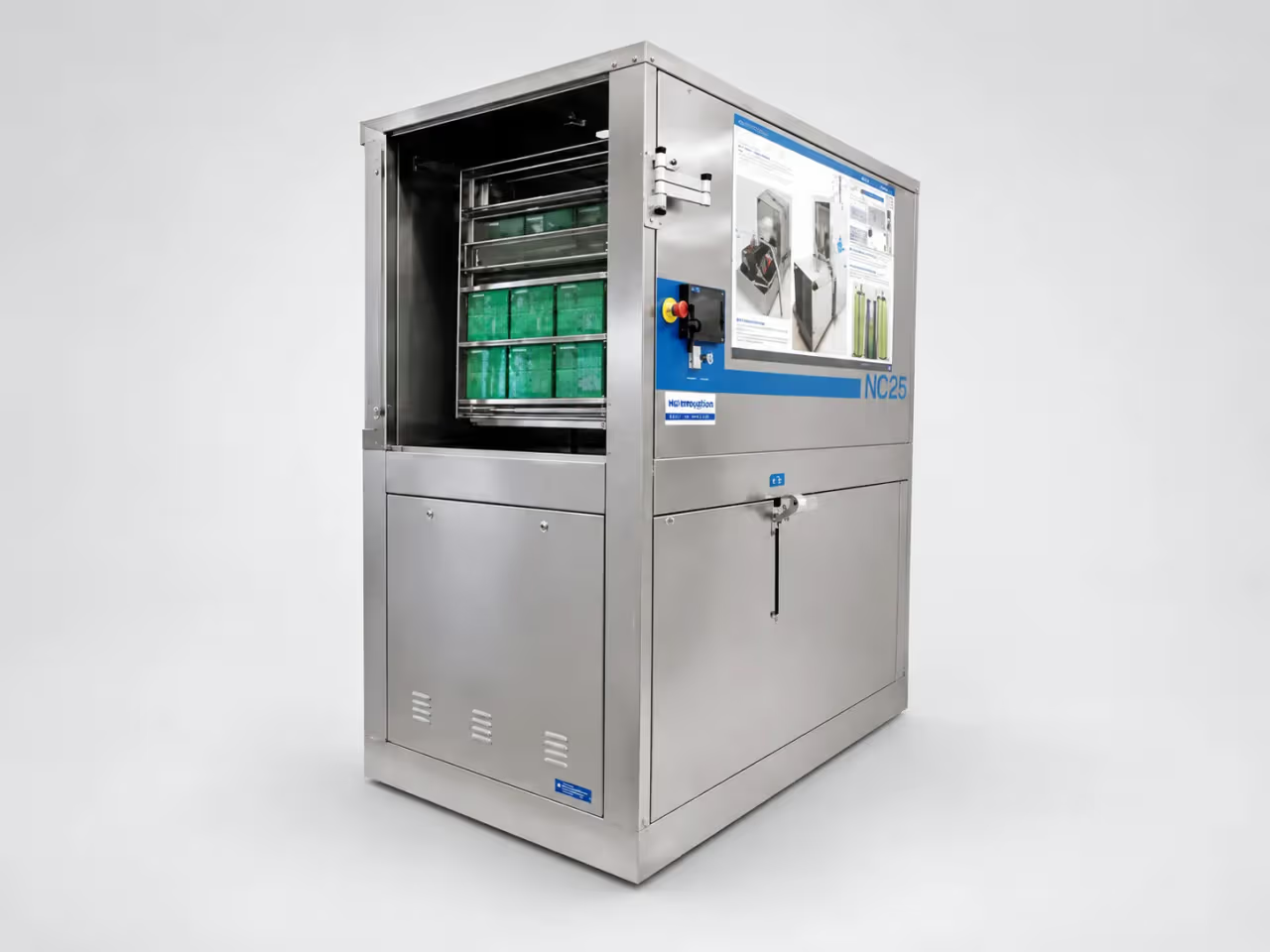
NC25E
Submerged-jet board cleaning in a compact footprint
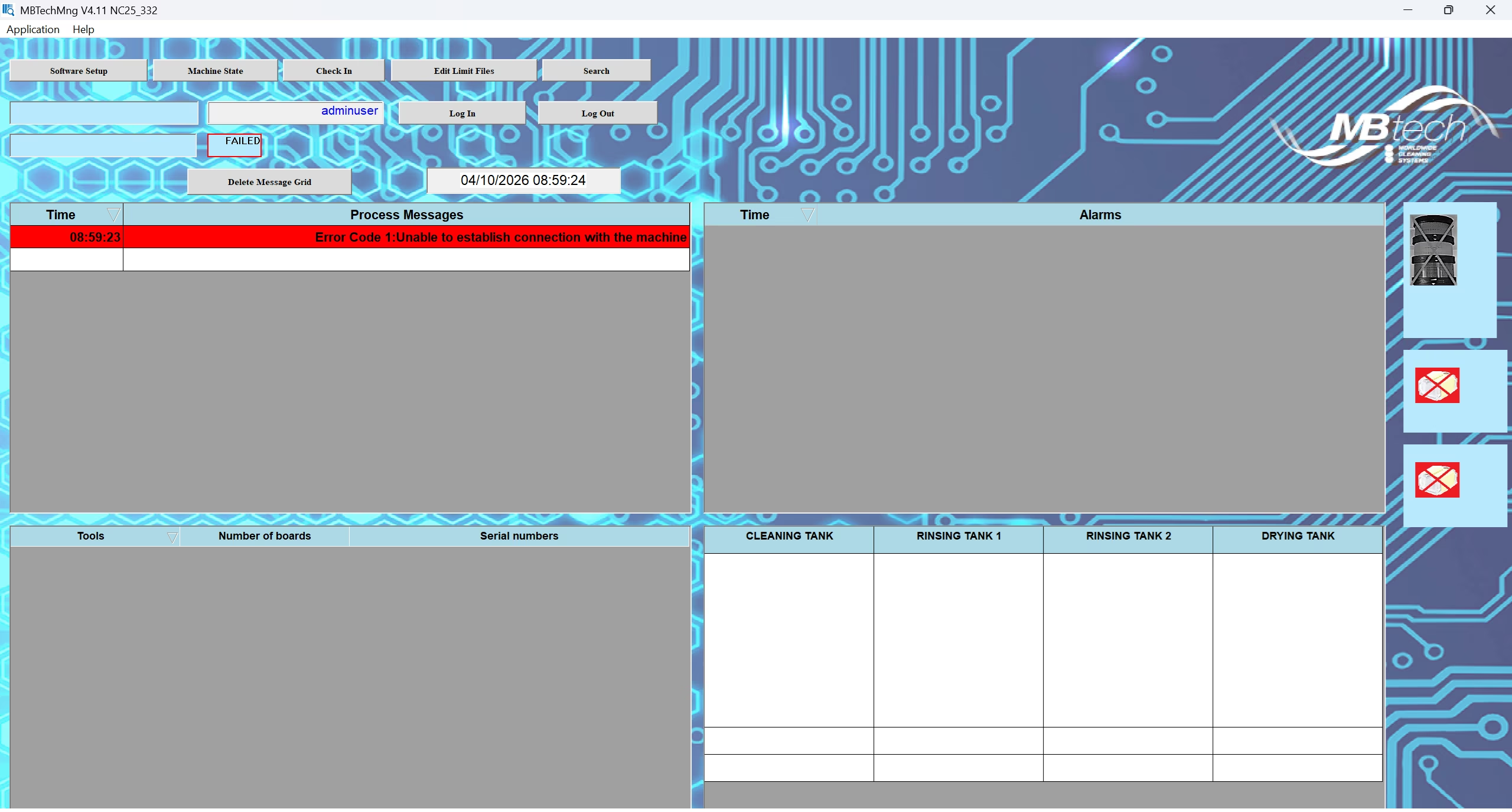
MBTechManager
Board-by-board traceability for the NC25 range
Frequently asked questions
Should an assembled board with a “no-clean” flux be cleaned?
“No-clean” means the residue is designed to remain harmlessly under given conditions. As soon as reliability, appearance or a later step (coating, bonding) requires it, cleaning becomes relevant again. The decision is made case by case, by measuring cleanliness.
Ultrasonics or submerged jets for dense boards?
Ultrasonics offer fine penetration but require checking component sensitivity. Submerged jets provide directed mechanical action under immersion, effective under low-standoff packages. The choice depends on the board: a trial settles it.
How do you check that a board is really clean?
By an objective cleanliness measurement (ionic residues, localised measurements) rather than by eye, and by tracking results over time to ensure repeatability.
Further reading

Technical guide
Complete guide to the N29 range: cleaning technology for screen printing
Discover how MBtech's N29 range transforms the cleaning of stencils and screen printing equipment, thanks to advanced ultrasonic technology and closed-loop filtration systems.
Technical guide
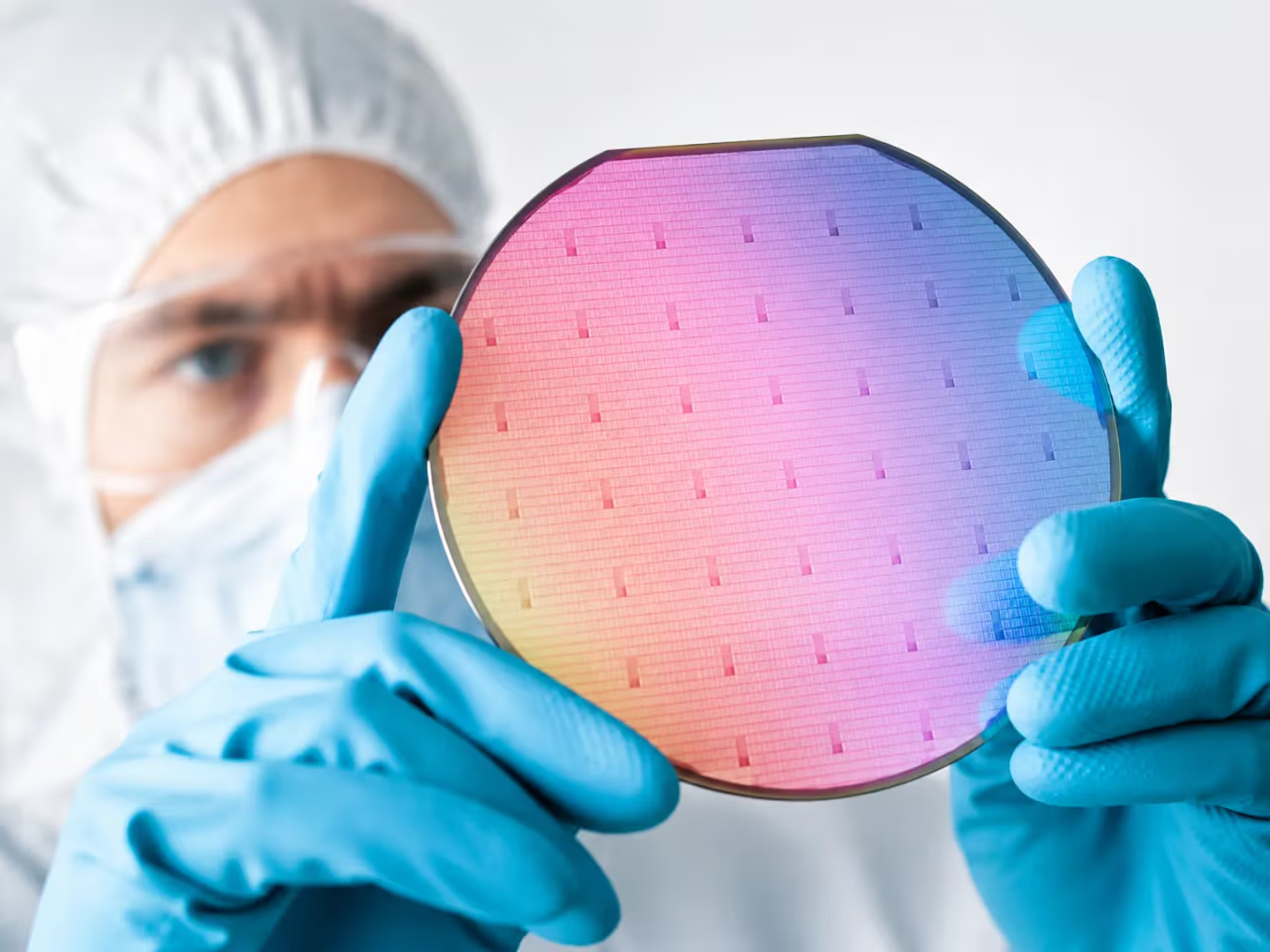
Semiconductors: the requirements of cleaning in a sensitive environment
Why cleaning parts intended for semiconductors demands a stricter framework — and what that means for the process and the environment.
Technical guide
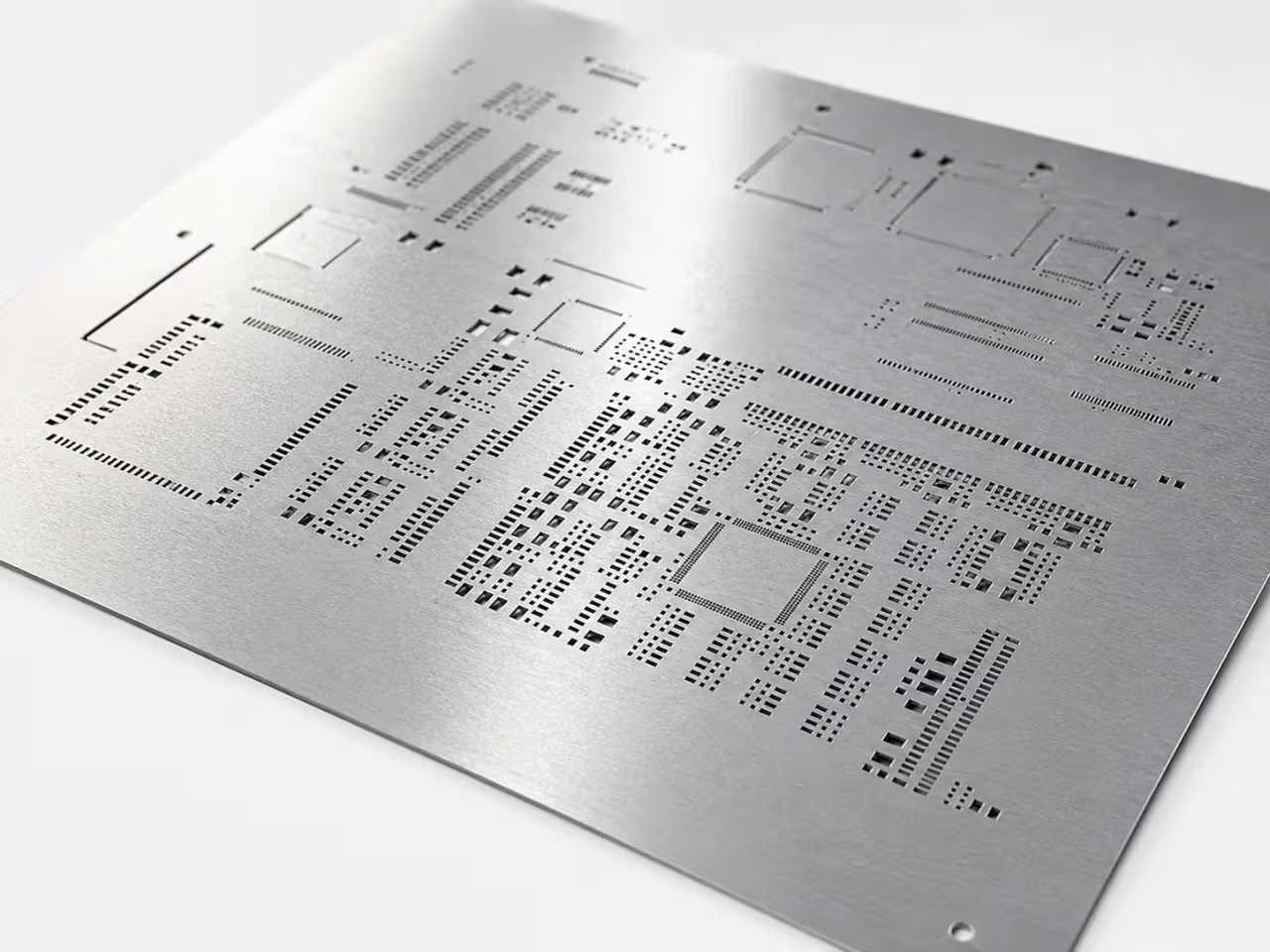
Screen printing stencil cleaning: the criteria to watch
Frequency, chemistry, drying, aperture inspection: the parameters that determine print quality and stencil lifetime.
A cleaning project to discuss?
Tell us about your parts and your constraints. Our process specialists will get back to you.
Talk to an expert