
Technical guide
Screen printing stencil cleaning: the criteria to watch
A poorly cleaned stencil means clogged apertures, uneven paste deposits and downstream defects. Here is what makes the difference.
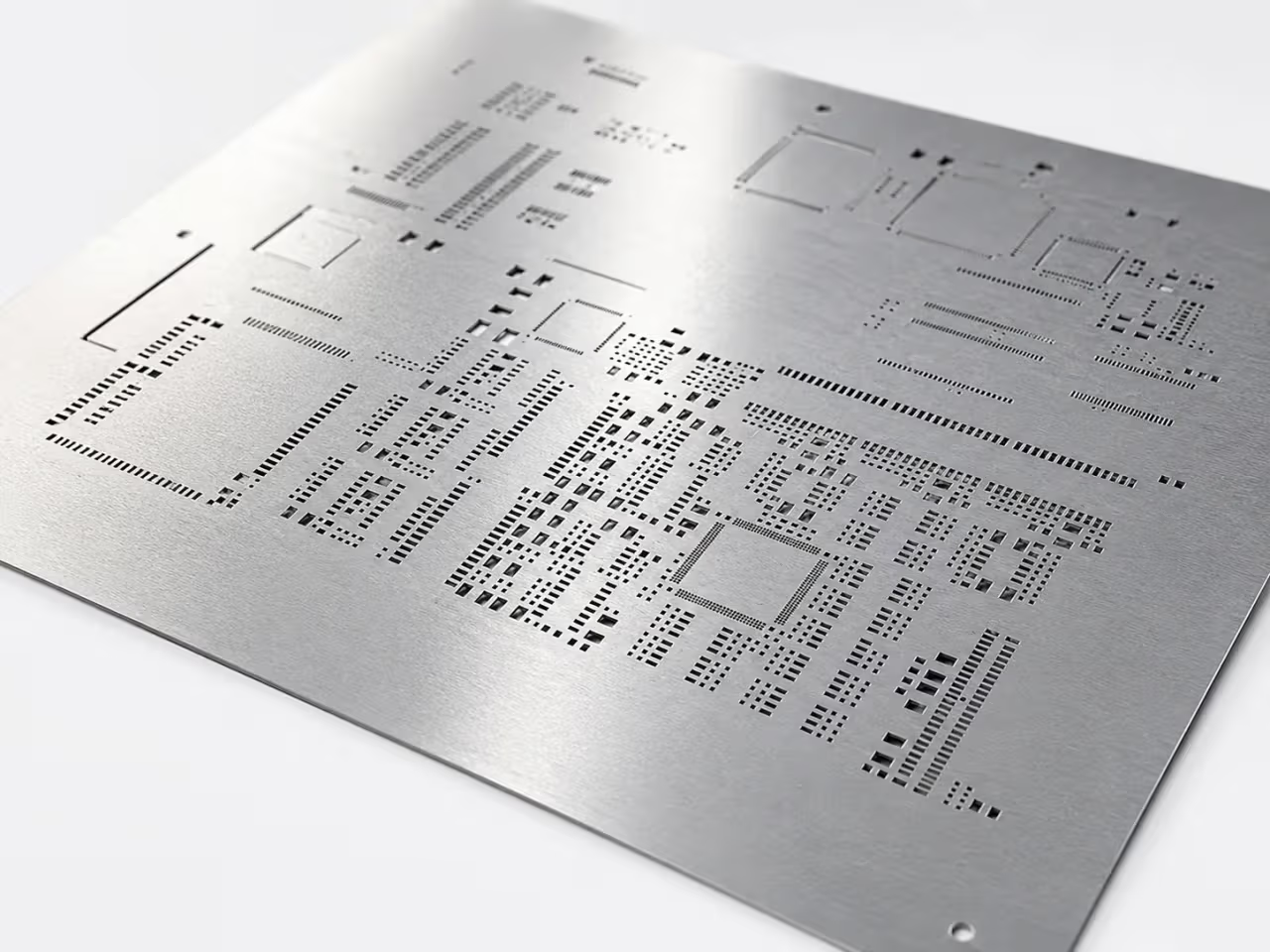
The stencil is the first link in paste printing. A partially blocked aperture immediately results in insufficient deposit, and therefore a soldering defect. Stencil cleaning is not a side chore: it is a process parameter in its own right.
Clean at the right time
Solder paste dries quickly in the finest apertures. The longer cleaning is delayed, the more the residues harden and the harder they are to remove. Defining a frequency — at the end of a run, after a set number of prints, or as soon as a defect appears — avoids having to deal with encrusted deposits.
Adapt the chemistry and the agitation
Well-tuned aqueous cleaning, combined with suitable agitation, removes paste without attacking the stencil's stainless steel or the edges of the apertures. Ultrasonics help dislodge residues from the finest apertures; the power must still be controlled to preserve the geometry.
Don't neglect drying
A stencil returned to service while still damp leads to uneven deposits. Drying must be complete and uniform, including inside the apertures, before returning to production.
Related products
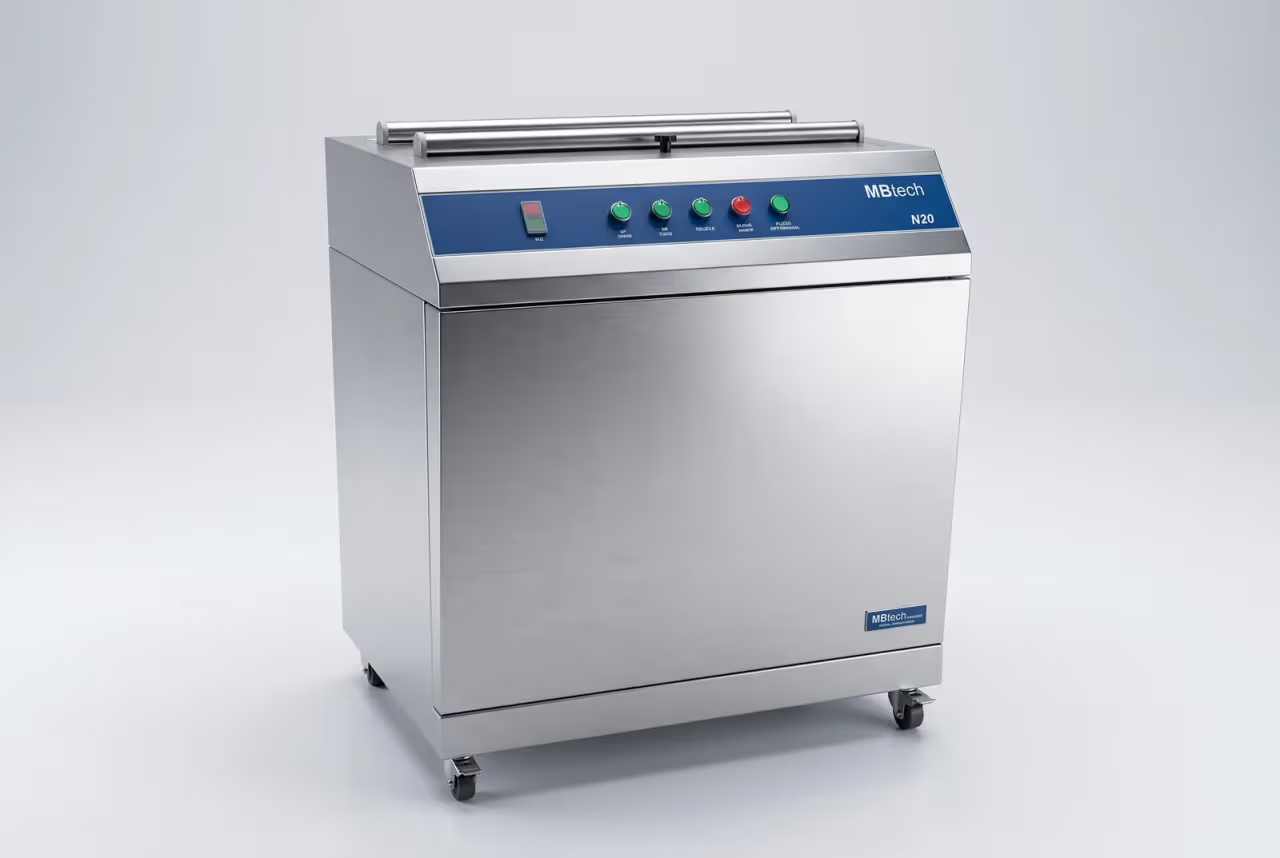
N29
High precision cleaning of screen printing stencils
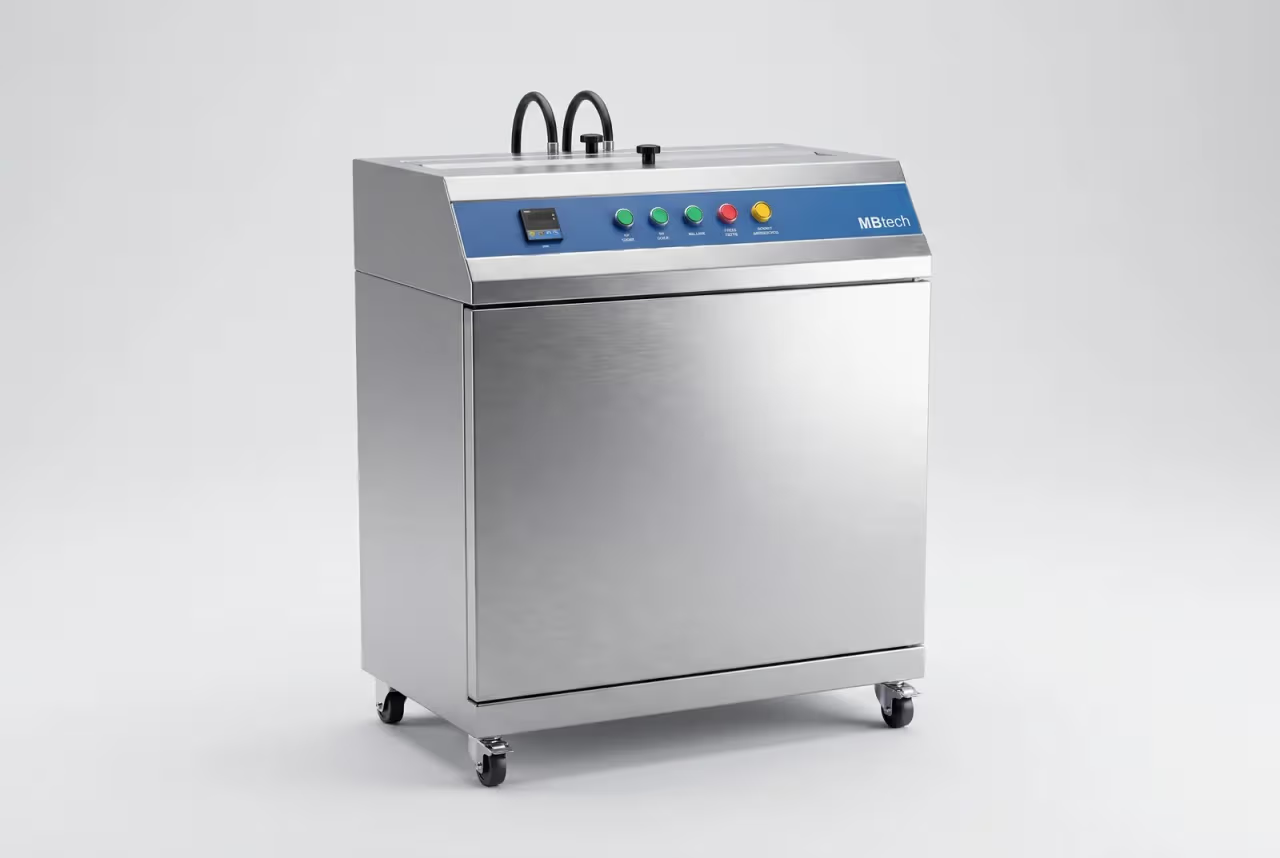
N29E
The N29 with an integrated drying cell
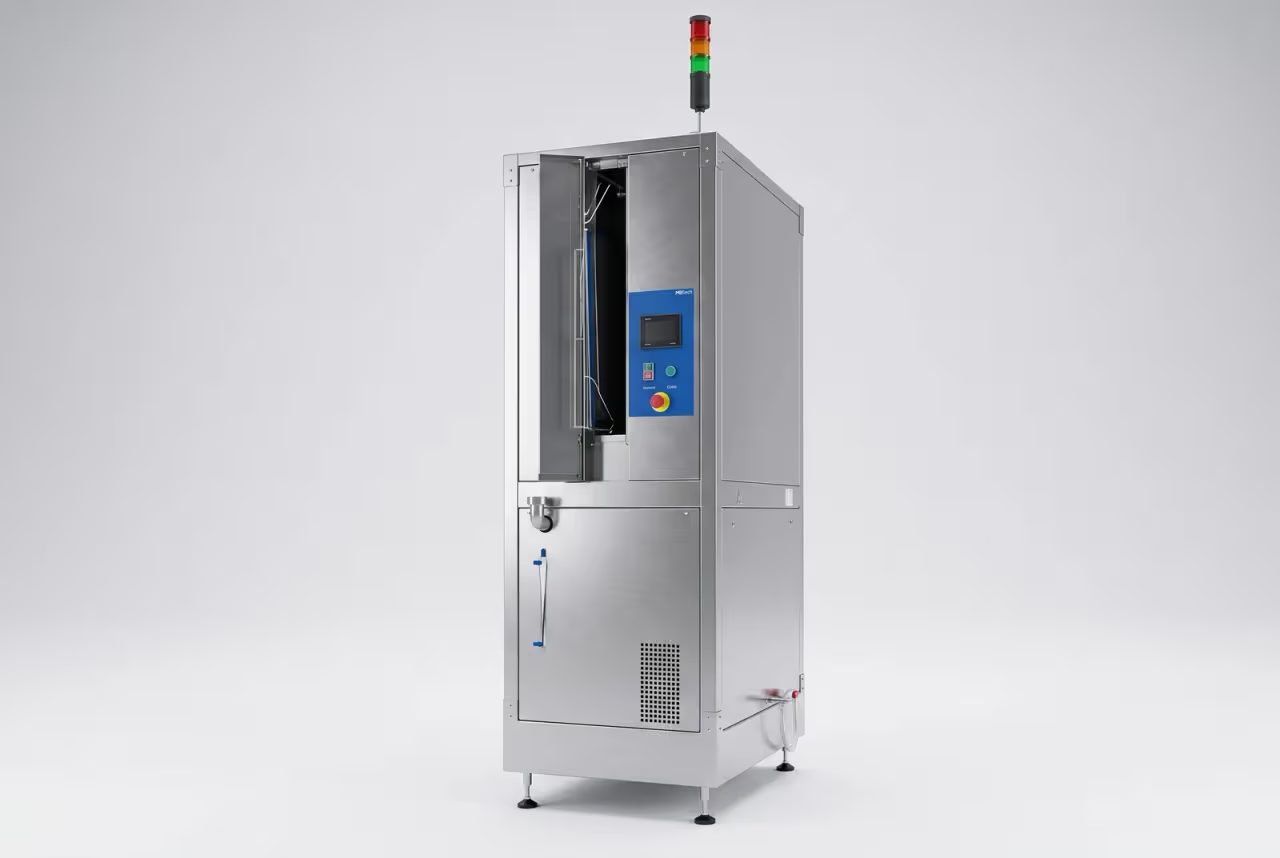
N29AUTO
The automatic version of the N29 range
Frequently asked questions
How often should a screen printing stencil be cleaned?
There is no universal frequency: it depends on the paste, the fineness of the apertures and the rate. The principle is to clean before the paste dries in the apertures, and to set a repeatable rule (end of run, print-count threshold, or appearance of a defect).
Does cleaning damage the stencil?
A correctly tuned aqueous process preserves the stainless steel and the geometry of the apertures. Risks appear with unsuitable chemistry or excessive ultrasonic power: hence the value of validating the setting.
Further reading

Technical guide
Complete guide to the N29 range: cleaning technology for screen printing
Discover how MBtech's N29 range transforms the cleaning of stencils and screen printing equipment, thanks to advanced ultrasonic technology and closed-loop filtration systems.
Technical guide
Semiconductors: the requirements of cleaning in a sensitive environment
Why cleaning parts intended for semiconductors demands a stricter framework — and what that means for the process and the environment.
Technical guide
How to choose a cleaning process for electronic boards?
Flux residues, solder paste, conformal coating: each contaminant calls for a different cleaning physics. A method for framing the need before looking at machines.
A cleaning project to discuss?
Tell us about your parts and your constraints. Our process specialists will get back to you.
Talk to an expert